
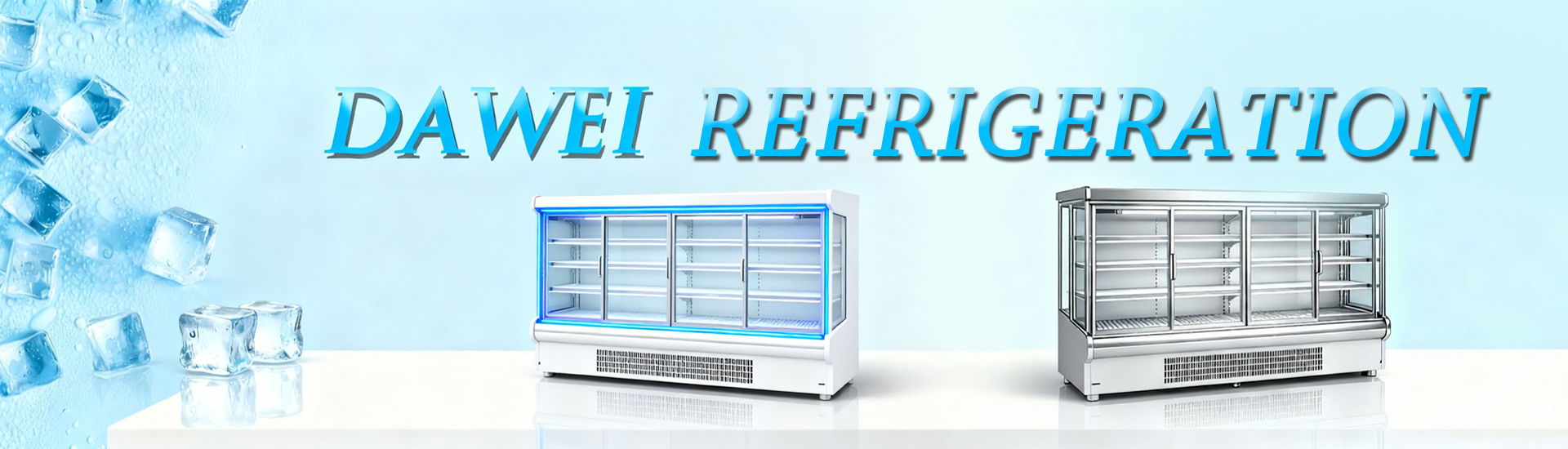
Choosing the right commercial freezer is one of the most important equipment decisions any food business will make. The wrong unit leads to high energy bills, product loss, and constant repairs. The right one protects your inventory, controls costs, and runs reliably for years.
This complete guide explains the different types of commercial freezers, how to plan the right size, how they compare to a commercial cooler, and what to check before you buy—whether you're outfitting a single restaurant or sourcing equipment for distribution.
1.What Is a Commercial Freezer?
A commercial freezer is a refrigeration unit engineered for business use—restaurants, supermarkets, convenience stores, bakeries, hotels, and cold chain operations. Unlike a home freezer, it's built for:
Longer operating hours (often 24/7)
Frequent door openings during busy service
Higher product loads and faster turnover
Stable low temperatures in hot or humid environments
Heavy-duty components designed for years of continuous use
The core difference isn't just size—it's engineering. A commercial freezer uses stronger insulation, more durable compressors, better airflow design, and commercial-grade hardware.
2.Main Types of Commercial Freezers
Not every business needs the same type of freezer. Choosing the right category is the first step to efficiency.
2.1 Upright / Stand-up commercial freezer
The most common type for foodservice. Upright commercial freezers offer:
Easy access and organized shelving
Compact footprint
Fast staff workflow
Best for restaurants, cafés, and prep kitchens.
2.2 Reach-in commercial freezer
Designed for high-frequency access in busy kitchens. Available in 1-door, 2-door, and 3-door configurations. A 2-door commercial freezer is a popular upgrade when a single-door model can't handle the volume.
2.3 Chest freezer
A top-opening freezer with excellent cold retention, ideal for long-term frozen storage. Great for backup storage or products that don't need frequent access.
2.4 Display freezer / merchandiser
Glass-door or open-top freezers designed to sell frozen products—ice cream, frozen meals, or grab-and-go items. Presentation and lighting matter as much as cooling performance.
2.5 Undercounter and countertop freezers
Compact units for tight spaces such as bars, coffee stations, or checkout areas. Perfect for supporting main freezer capacity without taking up floor space.
2.6 Combo units (fridge + freezer)
A single cabinet with two independent temperature zones—chilled and frozen. Popular for smaller operations that need both without doubling the equipment count.
3.Commercial Freezer vs Commercial Cooler: What's the Difference?
Many buyers confuse a commercial freezer with a commercial cooler. Both are commercial refrigeration equipment, but they serve very different purposes.
Feature | Commercial Freezer | Commercial Cooler |
Temperature range | Below freezing (typically -18°C / 0°F or lower) | Above freezing (typically 2–8°C / 35–46°F) |
Primary use | Long-term storage of frozen products | Chilled storage or beverage/product display |
Product examples | Meat, seafood, ice cream, frozen bakery | Drinks, dairy, produce, deli items |
Door type | Usually solid door for insulation | Often glass door for merchandising |
Insulation | Thicker, heavier | Standard commercial-grade |
Energy use | Higher (deeper cooling required) | Lower per unit volume |
Which one do you need?
Need to keep products frozen? → Choose a commercial freezer
Need to keep products chilled or displayed? → Choose a commercial cooler
Need both? → Consider a combo unit or separate equipment based on volume
For many businesses, the right answer is both—a commercial freezer for frozen storage and a commercial cooler for chilled display or beverages.
4.Sizes and Capacity Planning
Choosing the right size prevents overspending and underperformance.
4.1 Common size categories
Small (under 400L / 14 cu ft): small kitchens, bars, coffee shops
Medium (400–800L / 14–28 cu ft): most restaurants, cafés, small stores
Large (800–1400L / 28–50 cu ft): busy restaurants, hotels, supermarkets
Extra-large (1400L+ / 50+ cu ft): high-volume operations, distribution, cold chain
4.2 How to calculate the size you need
Consider:
Product volume per day and how often you restock
Peak-hour demand (weekends, holidays, seasonal spikes)
Available floor space and ventilation clearance
Door-opening frequency (more openings = need for better recovery, not just bigger volume)
Future growth (buy 20–30% larger than current need if budget allows)
4.3 Tip: bigger isn't always better
An oversized commercial freezer wastes energy cooling empty space. An undersized one struggles during peak hours. Match the size to real usage, not maximum theoretical load.
5.What to Look for When Choosing Commercial Freezers
Before you buy, evaluate these performance factors:
5.1 Temperature stability
Look for fast recovery after door openings, uniform airflow, and reliable defrost. Stable temperature is the #1 factor in reducing product loss.
5.2 Energy efficiency
Check for:
Thick, high-density insulation
Tight door gaskets and self-closing hinges
Efficient EC fan motors
Smart defrost logic
LED interior lighting
Energy is one of the biggest lifetime costs of any commercial freezer.
5.3 Build quality
Reliable hinges, gaskets, controllers, and fan motors reduce breakdowns. Standardized spare parts save money over time.
5.4 Ease of maintenance
Accessible condenser coil
Clear wiring and troubleshooting documentation
Easy-to-replace gaskets and shelves
5.5 Compliance and safety
Verify certifications, refrigerant type, and labeling for your target market—especially if you're buying for export or distribution.
5.6 Warranty and after-sales support
Clear scope (parts, compressor, whole unit)
Local parts availability
Documented claim procedure
6.Common Mistakes to Avoid
Even good equipment can underperform if used incorrectly. Avoid these mistakes:
Placing the unit near heat sources or in poorly ventilated corners
Overloading shelves and blocking airflow
Ignoring gasket wear and door misalignment
Skipping condenser coil cleaning
Buying based on price alone instead of total cost of ownership
Choosing the wrong type (e.g., using a commercial cooler where a commercial freezer is needed)
Undersizing to save money—then paying more in energy and repairs
7.Buying Commercial Freezers for B2B and Export
For distributors, project contractors, and OEM buyers, additional factors matter:
7.1 Component quality and consistency
Confirm compressor brand, controller, fan motors, and glass supplier. Batch-to-batch consistency is critical for large orders.
7.2 Packaging and container loading
Corner protection and anti-tip design
Pallet/base structure for safe stacking
Loading quantity per 20GP/40HQ container
7.3 OEM/ODM capability
Logo placement and color customization
Packaging artwork
Structural changes for target markets
7.4 Compliance for target markets
Voltage/frequency and plug type
Refrigerant acceptance and safety labeling
Required test reports and certifications
7.5 Spare parts and after-sales strategy
Provide a recommended spare parts kit per container and clear technical documentation to support local technicians.
8.FAQ
What is the difference between a commercial freezer and a household freezer?
A commercial freezer is designed for continuous operation, frequent door openings, and higher loads. It uses stronger insulation, heavier-duty components, and more advanced airflow than a household unit.
How do I choose between a commercial freezer and a commercial cooler?
Use a commercial freezer for frozen products and a commercial cooler for chilled storage or product display. Many businesses need both.
Why do some buyers search for "comercial freezer"?
"Comercial freezer" is a common misspelling of "commercial freezer" in online searches. The product category is the same—commercial-grade freezing equipment for business use.
What size commercial freezer do I need?
It depends on your daily product volume, restocking frequency, and peak-hour demand. As a general rule, buy 20–30% more capacity than your current need to allow for growth.
Are upright commercial freezers more efficient than chest freezers?
Upright models offer faster access and better workflow, which reduces door-open time. Chest freezers hold cold air better but are harder to access, especially in high-turnover operations.
How long do commercial freezers typically last?
With proper installation and maintenance, a quality commercial freezer can last 10–15 years or more. Regular condenser cleaning, gasket checks, and correct loading are key.
Can I buy commercial freezers with OEM branding?
Yes—for B2B and export buyers, OEM customization (logo, color, packaging) is often available. Confirm minimum order quantities and lead times with your supplier.
Conclusion
A well-chosen commercial freezer protects your inventory, reduces energy waste, and supports smooth daily operations for years. Whether you need a compact upright unit, a high-capacity 2-door commercial freezer, a display merchandiser, or a combo cabinet with both freezing and cooling zones, the right choice depends on matching the equipment to your real-world usage.
Understanding the difference between commercial freezers and a commercial cooler, planning the right size, and evaluating suppliers on quality—not just price—will save your business thousands over the equipment's lifetime.