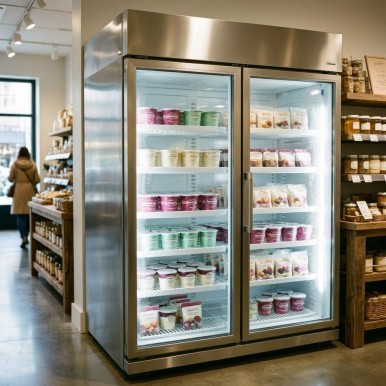

Choosing the right commercial refrigeration solution is not only about reaching a target temperature—it’s about stable performance, energy cost, uptime, and easy service. Whether you’re buying a commercial refrigerator, commercial fridge, commercial cooler, comercial freezer, or a dedicated drink cooler, this guide covers the universal buyer concerns that help reduce breakdowns and improve ROI.
1.What is commercial refrigeration equipment?
Commercial refrigeration equipment generally includes cold storage and display units used in retail and foodservice environments:
Upright reach-in units: solid-door or glass-door commercial refrigerator / freezer
Merchandisers: glass-door beverage displays and promotional coolers (often called commercial cooler)
Undercounter & back-bar units: compact fridge for commercial kitchens and bars
Prep tables: refrigerated worktops for high-frequency access
Combo units: commercial fridge freezer (chilled + frozen in one footprint)
Ice solutions: standalone ice makers paired with cold storage (some buyers also search “commercial commercial ice maker” when comparing options)
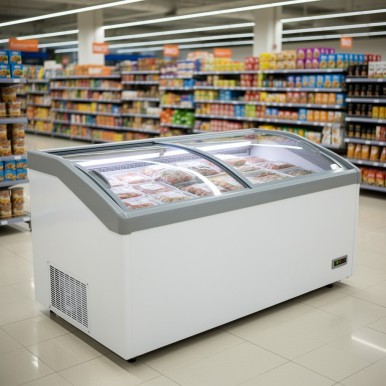
2.The universal checklist buyers care about (before requesting a quote)
A.Temperature stability and recovery speed
A reliable commercial fridge must hold temperature consistently during real operation—door openings, peak hours, and warm ambient conditions.
What to verify:
Setpoint accuracy and stability
Recovery time after door openings
Airflow uniformity (hot/cold spots)
Defrost method and defrost reliability (critical for freezer applications)
B.Reliability and build quality (downtime costs money)
Long-term performance depends on component selection and assembly quality.
Buyers commonly ask about:
Compressor specification and warranty terms
Fan motors and controller stability
Door hinges, gaskets, shelf strength, and corrosion resistance
Drainage design (to prevent leaks and odors)
C.Energy consumption and operating cost
Energy use is often the biggest lifetime cost of a commercial refrigerator.
Look for:
Clear power/energy data based on recognized test methods
High-performance insulation and tight door sealing
Efficient fans and optimized defrost logic
LED lighting and smart anti-sweat control (glass-door units)
D.Refrigerant type and safety design
Refrigerant affects efficiency, service practices, and local compliance.
Ask your supplier:
Which refrigerant is used and why
Required safety labels and service instructions
Any restrictions or installation considerations in your market
(Always confirm with local regulations and your service team.)
E.Noise level (especially for customer-facing areas)
Noise matters most for front-of-house placement:
cafés, bars, open kitchens, hotels, offices
A quiet drink cooler or display unit improves customer comfort and staff experience.
F.Display and merchandising performance (for drink coolers and glass-door units)
If your goal is product visibility and impulse sales, focus on:
Anti-fog glass performance
Lighting brightness and uniformity
Shelf adjustability and load capacity
Branding options (lightbox, decals, color customization)
A strong merchandiser can outperform a basic commercial cooler even if both hit the same temperature.
G.Serviceability, spare parts, and after-sales support
Buyers want equipment that’s easy to maintain and quick to repair:
Easy access to condenser coil and electrical box
Standardized spare parts (fans, controllers, gaskets, hinges)
Wiring diagram and troubleshooting guide
Clear warranty scope (parts, compressor, exclusions)
This is especially important when sourcing a comercial refrigerator (common misspelling in searches) online—documentation builds trust.
3.Quick selection guide by application
Beverage & retail display: choose a glass-door commercial refrigerator or dedicated drink cooler designed for frequent door openings and strong presentation.
Back-of-house food storage: choose a solid-door commercial fridge for durability and temperature stability.
Frozen storage: choose a comercial freezer with robust insulation, reliable defrost, and stable low-temperature control.
Limited space, mixed needs: a commercial fridge freezer combo can reduce footprint and simplify operations.
Complete beverage station: pair a drink cooler with an ice solution (including searches like commercial commercial ice maker) for a full-service setup.
4.Supplier questions that prevent costly mistakes (copy/paste for your RFQ)
What are the exact dimensions, capacity, and net usable volume?
What ambient temperature range can the unit handle?
What are the temperature range and control tolerance?
What is the refrigerant type and charge, and what safety labeling is included?
What energy/power data can you provide and what test standard was used?
What packaging method is used to reduce shipping damage?
What spare parts are recommended, and what’s the lead time for parts?
What is the warranty scope (especially compressor coverage)?
5.Popular search terms customers use (and what they usually mean)
commercial refrigerator / comercial refrigerator: general-purpose upright fridge, often reach-in
commercial refrigeration / commercial refrigeration equipment: category-level search (multiple product types)
commercial fridge: daily-use kitchen or storage unit
fridge for commercial: compact or undercounter units for professional use
commercial cooler: beverage/display cooler, sometimes back-bar
drink cooler: beverage-focused glass-door unit, high-traffic use
comercial freezer: upright or chest freezer for commercial frozen storage
commercial fridge freezer: combo unit with two temperature zones
commercial commercial ice maker: ice maker search term (often typed when comparing beverage station equipment)