

Choosing the right commercial refrigerator is one of the most important equipment decisions for any food retail, foodservice, or beverage business. The right unit protects product quality, controls energy cost, and reduces downtime—while the wrong one causes constant complaints and repair tickets. This guide explains how to select reliable commercial refrigeration, what buyers care about most, and how to plan for service and long-term operation.
1) What “Commercial” Really Means
A fridge for commercial use is engineered differently from a home appliance. It runs longer hours, opens more frequently, handles higher product loads, and must keep stable temperatures even in hot kitchens or busy retail spaces. That’s why business buyers compare commercial refrigerators by build quality, airflow design, and component durability—not just by size or price.
2) Common Equipment Categories
2.1 Reach-in commercial refrigerator
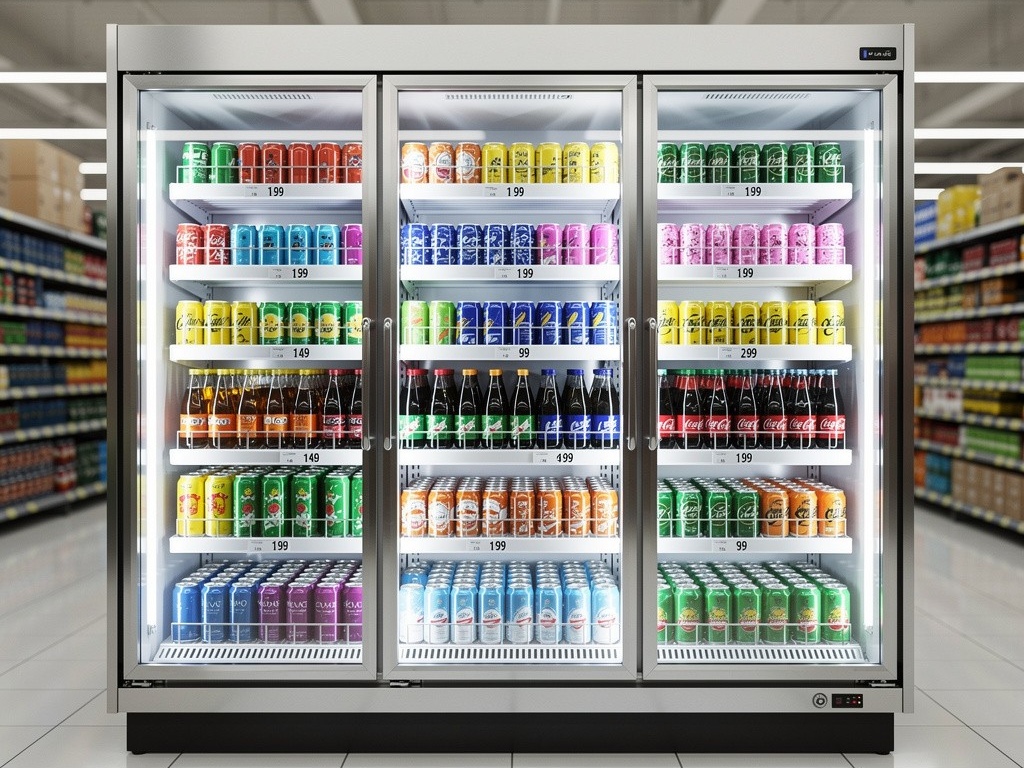
A reach-in commercial refrigerator is the everyday workhorse for kitchens and back-of-house storage. Solid-door versions focus on insulation and durability, while glass-door versions support quick product identification.
2.2 Commercial cooler / display merchandiser
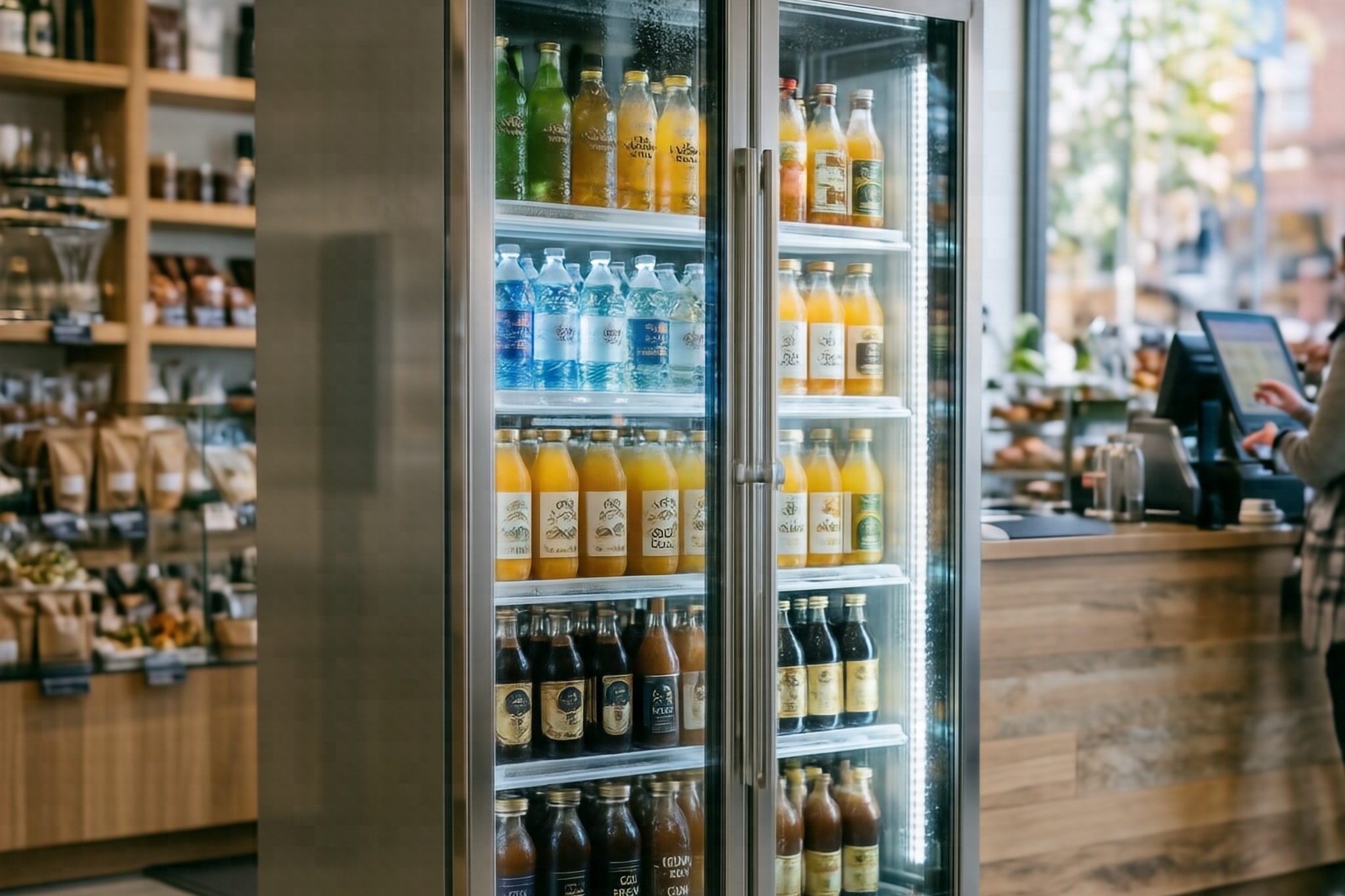
A commercial cooler is built to merchandise products to customers—beverages, dairy, grab-and-go items, or promotional displays. Key performance points include lighting brightness, anti-fog glass, shelf layout, and stable temperature during frequent door openings.
2.3 Freezer and combo units
For businesses that need both chilled and frozen storage, combo units help save space while keeping operations organized. Always confirm independent temperature control and a reliable defrost system.
2.4 Undercounter and worktop units
Compact units that fit under counters or worktops are popular for bars, cafés, and prep stations where space is limited. They are typical examples of a fridge for commercial environment where ergonomics matter as much as cooling performance.
3) What Buyers Care About Most
3.1 Temperature stability under real conditions
A spec sheet only tells part of the story. What matters is how the cabinet performs during peak hours and frequent door openings. Look for fast temperature recovery, uniform airflow, and reliable defrost.
3.2 Energy efficiency and operating cost
Energy is one of the biggest lifetime costs of any commercial refrigeration equipment. Choose units with strong insulation, tight door seals, efficient fan motors, LED lighting, and smart defrost logic.
3.3 Build quality and serviceability
Reliable hinges, gaskets, controllers, and fan motors reduce breakdowns. Easy access to the condenser coil and electrical box makes service faster and cheaper. Standardized spare parts are a major advantage when scaling across multiple locations.
3.4 Noise level
Noise matters for customer-facing placement, especially in cafés, bars, and hotels. Ask the supplier for noise test data and recommended installation conditions.
3.5 Presentation (for display units)
For a commercial cooler used in retail, presentation is part of performance. LED uniformity, anti-fog glass, shelf design, and branding options can directly influence customer purchase decisions.
4) Installation: Protect Performance From Day One
Many “early failures” are caused by setup mistakes, not factory defects. Proper installation of any commercial refrigerator should include:
Adequate ventilation clearance and placement away from heat sources or direct sunlight
Correct leveling to ensure door sealing and proper drainage
Verified electrical conditions (voltage, frequency, grounding, plug type)
Commissioning test (setpoint verification, defrost check, 24–48 hour run before full loading)
Rest time after transport before powering on (most units must stay upright during shipping)
5) Service, Maintenance & Repair
5.1 Routine maintenance
Regular maintenance keeps performance stable and energy costs predictable:
Clean condenser coils on a schedule based on environment (dust/grease)
Check door gaskets for leaks and replace when worn
Verify drain line flow and clear blockages
Confirm controller calibration and alarm settings
5.2 When buyers search “commercial refrigeration repair near me”
End users typically search for commercial refrigeration repair near me only after experiencing downtime symptoms such as rising temperatures, excessive frost, abnormal noise, or short compressor cycling. For distributors and operators, the goal is to reduce that moment with better documentation, faster diagnosis, and reliable spare parts supply.
5.3 Reduce repair costs with simple practices
Train staff to identify early symptoms (noise changes, water pooling, temperature drift)
Keep a basic spare parts kit (gaskets, fan motors, controllers)
Document model numbers and serial numbers for faster technician support
Schedule preventive checks instead of waiting for breakdowns
6) How to Choose the Right Supplier
Whether you’re sourcing one unit or building a full lineup of commercial refrigerators for distribution, evaluate suppliers on more than price:
Component sourcing (compressor brand, controller, fan motors, glass supplier)
Incoming inspection, in-process checks, final QC, and aging tests
Packaging quality and shipping damage rate
OEM/ODM capability (logo, color, structural changes, packaging artwork)
Spare parts logistics and after-sales response speed
Clear warranty policy (parts, compressor, whole unit)
7) RFQ Template (Copy/Paste for a Faster Quote)
Application: restaurant / convenience store / supermarket / bar / hotel / other
Product type: reach-in commercial refrigerator / commercial cooler / freezer / combo / undercounter
Target temperature range and intended product
Size (W×D×H) and target capacity
Door type (solid/glass), shelf layers, lighting needs
Power requirement (voltage/frequency/plug)
Quantity, lead time, destination port, Incoterms
Branding needs (logo, color, packaging artwork)
Required compliance documents (if any)
FAQ
What’s the difference between a commercial refrigerator and a commercial cooler?
A commercial refrigerator usually focuses on storage durability and stable temperature, while a commercial cooler is typically designed to merchandise products with strong visibility and presentation.
Why is a fridge for commercial use different from a home fridge?
A fridge for commercial environment is built for long operating hours, frequent door openings, higher loads, and stable temperatures in tougher conditions. Components, insulation, and airflow design are all stronger than residential units.
How do we reduce the need for repair?
Proper installation, scheduled cleaning, routine gasket checks, and basic staff training significantly reduce the chance of end users needing to search commercial refrigeration repair near me.
How should we evaluate different commercial refrigerators before ordering at scale?
Compare commercial refrigerators using objective points: temperature stability, energy use, component brands, warranty scope, packaging quality, and spare parts availability.
Do you support OEM and private label production?
Yes—OEM support is often a deal-maker for B2B buyers. Confirm logo placement, color customization, packaging artwork, and any structural changes required for the target market.